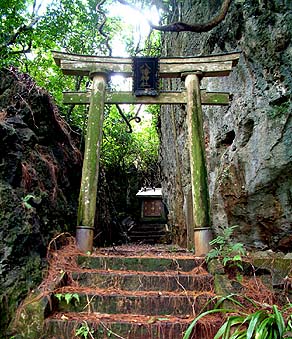
this is a shrine to Inari, the fox spirit and god of rice.
Showing posts with label reserch. Show all posts
Tuesday, November 24, 2009
Shrines and Spirit Houses
this is a shrine to Inari, the fox spirit and god of rice.
Labels:
reserch,
school assignments
Wednesday, November 18, 2009
Mangrove Trees
looking around the web for Mangrove Branches.
this site has some nice pictures-of everything but the branches. it specializes in seeds.
http://www.seabean.com/guide/Rhizophora_mangle/index.htm
source: http://www.marietta.edu/~biol/biomes/mangroves.htm
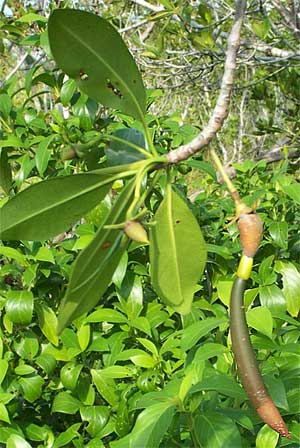
this is a picture of the branches of the Red Mangrove, the most common. Their seeds look funny :P they actually look like magnolia trees. i wonder if they are related?
source: http://www.backyardnature.net/yucatan/mangrove.htm
yep, those twigs are distinctive. and the silly looking beans too.
this site has some nice pictures-of everything but the branches. it specializes in seeds.
http://www.seabean.com/guide/Rhizophora_mangle/index.htm
this is a picture of the branches of the Red Mangrove, the most common. Their seeds look funny :P they actually look like magnolia trees. i wonder if they are related?
yep, those twigs are distinctive. and the silly looking beans too.
Labels:
reserch,
school assignments
Monday, November 9, 2009
Paper Casting
having worked with paper before, i was interested in this process. the real challenge is making the cast object not look like a child's paper mache project.
Process:
I've found a few sites, and on all of them the process is the same: create paper pulp and put it in a mold. It's pretty intuitive, and most of the creative part is with the materials you use.
Examples:
source: http://www.castpaper.com/
one of the most eye-catching and creative parts of cast paper appears to be the coloring of the paper itself. Working with paper before, i can attest to the amount of different colors and finishes you can get with this medium. The craftsperson that made this particular piece used acrylics to paint the piece, which give a good opaque finish and have strong pigments.
here is Kevin Dyer's process: http://www.castpaper.com/castpaper.html
He carves a model out of wax, then makes a mold of that, much like with metal casting processes. However, most of his work is shallow relief work. This is common in cast paper.
source: http://artveinvessel.blogspot.com/
Deep releif is also possible. Kate Strickland cast deep recesses in paper and then fills them with natural objects, creating "Reliquaries". Her work is more honest about it's materials-she doesn't paint over the paper.
Kate's blog: http://artveinvessel.blogspot.com/search/label/cast%20paper
source: http://bloggy.com/2008/04/libby_hartle_at.html
Libby Hartle, on the other hand, works in full 3-d. She also used relclaimed materials for this peice. She was sweet enough to document her whole process, from smashing up the paper to casting the twigs (made from molds of real twigs, which is something i want to look into) , right here: http://bloggy.com/2008/04/libby_hartle_at.html
Process:
I've found a few sites, and on all of them the process is the same: create paper pulp and put it in a mold. It's pretty intuitive, and most of the creative part is with the materials you use.
Examples:
one of the most eye-catching and creative parts of cast paper appears to be the coloring of the paper itself. Working with paper before, i can attest to the amount of different colors and finishes you can get with this medium. The craftsperson that made this particular piece used acrylics to paint the piece, which give a good opaque finish and have strong pigments.
here is Kevin Dyer's process: http://www.castpaper.com/castpaper.html
He carves a model out of wax, then makes a mold of that, much like with metal casting processes. However, most of his work is shallow relief work. This is common in cast paper.
source: http://artveinvessel.blogspot.com/Deep releif is also possible. Kate Strickland cast deep recesses in paper and then fills them with natural objects, creating "Reliquaries". Her work is more honest about it's materials-she doesn't paint over the paper.
Kate's blog: http://artveinvessel.blogspot.com/search/label/cast%20paper
Libby Hartle, on the other hand, works in full 3-d. She also used relclaimed materials for this peice. She was sweet enough to document her whole process, from smashing up the paper to casting the twigs (made from molds of real twigs, which is something i want to look into) , right here: http://bloggy.com/2008/04/libby_hartle_at.html
Labels:
reserch,
school assignments
Monday, November 2, 2009
Reserch-alternate casting materials: Resin
Resin-Process
Slush Casting
found this step by step site for a process called "slush casting": http://www.alumilite.com/HowTos/SlushCasting.cfm NOTE: this site has a TON of great tutorials, using the products they sell of course. But they are still straight-forward and nicely done.
picture from the site:
i anticipate making molds of all my little plastic animals out of all sorts of shiny plastics. just for fun, of course.
helpful things learned:
-silicone will only bond to silicone, so if you use a silicon mold you might not have to use a release.
-Slush casting involves putting a thin coat of resin on the surface of the mold, so there is an outer shell of resin that picks up the details but the shape is hollow (in the example, the rest is filled with foam to re-enforce the fragile shell. This saves money and weight.
-though the mold has to cure overnight, casting the peice only takes about 10 minutes, including resin and foam. Yay!
Epoxy Resin
this site may be for model makers rather than artists, but the advise is sound: http://www.torreypinesgulls.org/epoxy.htm
important points:
-mesure both parts on a scale so that you mix it just right.
-paper cups, popsicle sticks, and crappy brushes are all you need, besides the molds.
-you can strengthen the epoxy by adding in fibers (like fiberglass)
-if you type in a conversational tone, your readers will imagine you as a cute old man puttering about in a hobby shop.
-epoxy can also be used as a glue, and it's not always clear weather or not your talking about using it as a glue or a mold material, so after you type an entire list thingy and you realize that the person was talking about using it as a glue you feel like a total moron.
epoxy seems to be used as a surface treatment rather than a model-making material, so i'll move on. For now.
Final note: DO NOT EAT CASTING RESIN.
Slush Casting
found this step by step site for a process called "slush casting": http://www.alumilite.com/HowTos/SlushCasting.cfm NOTE: this site has a TON of great tutorials, using the products they sell of course. But they are still straight-forward and nicely done.
picture from the site:
i anticipate making molds of all my little plastic animals out of all sorts of shiny plastics. just for fun, of course.
helpful things learned:
-silicone will only bond to silicone, so if you use a silicon mold you might not have to use a release.
-Slush casting involves putting a thin coat of resin on the surface of the mold, so there is an outer shell of resin that picks up the details but the shape is hollow (in the example, the rest is filled with foam to re-enforce the fragile shell. This saves money and weight.
-though the mold has to cure overnight, casting the peice only takes about 10 minutes, including resin and foam. Yay!
Epoxy Resin
this site may be for model makers rather than artists, but the advise is sound: http://www.torreypinesgulls.org/epoxy.htm
important points:
-mesure both parts on a scale so that you mix it just right.
-paper cups, popsicle sticks, and crappy brushes are all you need, besides the molds.
-you can strengthen the epoxy by adding in fibers (like fiberglass)
-if you type in a conversational tone, your readers will imagine you as a cute old man puttering about in a hobby shop.
-epoxy can also be used as a glue, and it's not always clear weather or not your talking about using it as a glue or a mold material, so after you type an entire list thingy and you realize that the person was talking about using it as a glue you feel like a total moron.
epoxy seems to be used as a surface treatment rather than a model-making material, so i'll move on. For now.
Final note: DO NOT EAT CASTING RESIN.
Labels:
reserch,
school assignments
Subscribe to:
Posts (Atom)